Why is the Red Fort called red?
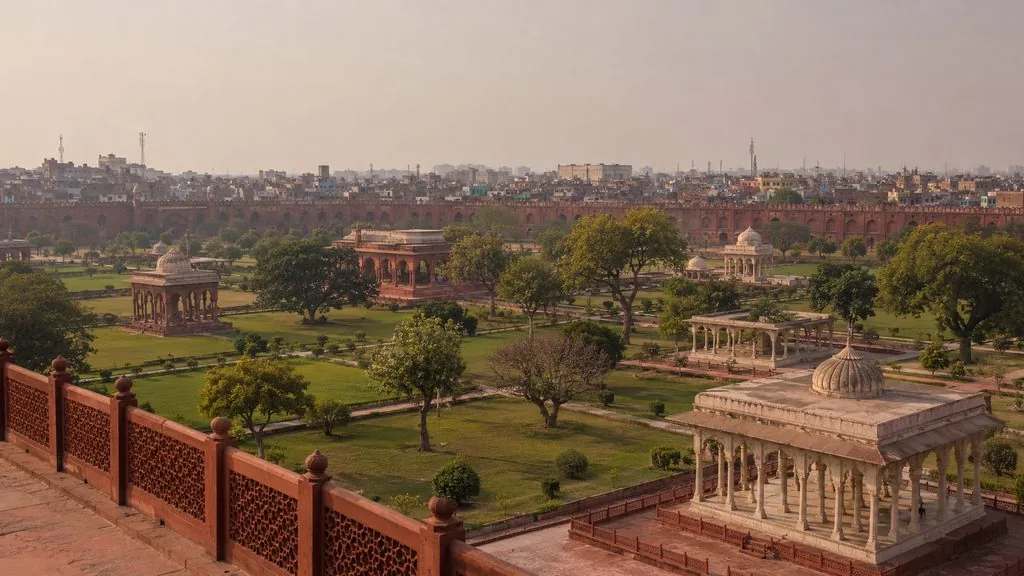
Sandstone for the outside
Red sandstone does the structural and ceremonial work: the curtain walls, the gates, the arcades of the public audience hall with their scalloped arches. It is the colour that carries at distance, and from a moving car on the road outside it is the only thing you register. Shah Jahan built the fort in the 1600s and the name followed the material immediately.
Marble for the inside
Past the lawn, the private halls along the eastern side are white marble, which is why visitors who have only seen the outside sometimes think they are in the wrong place. Both answers to the material question are correct depending on where you are standing, and the walk that takes you from one to the other is on what is inside the fort.
Someone to point it out
The guide-only listing meets at the Lahori Gate from $5, and that from-price is the guiding alone: entry, a rickshaw and the market extensions are add-ons chosen at booking, so nobody should read it as admission included. It rates 4.6 across 51 reviews and runs in English or Hindi. Viktorija from Sweden wrote: “Amazing tour guide Gopaal Jat and very nice sightings.”
Frequently asked questions
Why is the Red Fort red?
Because its curtain walls and gates are built of red sandstone, which is also where the name Lal Qila comes from. The colour belongs to the material rather than to any paint or coating.
Is the Red Fort made of marble or sandstone?
Both. Sandstone outside for the walls, gates and the public audience hall; white marble inside for the private palaces along the east wall — the walk in order.
What is the real colour of the Red Fort?
Red on the outside and white where it matters most on the inside. Photographs of the marble halls and photographs of the walls look like two different buildings, which is why the question keeps getting asked — the history behind both.